

OFFSCREEN 2026 – Moris – Poor Killing Poor
Moris
Pobres matando pobres [Poor Killing Poor]
OFFSCREEN, Paris
2026
The first revolution of the twentieth century was the Mexican Revolution. It was a complex guerrilla movement driven by the idealistic ambition of distributing rights and opportunities equally among the people. Tragically, it also became the first great failure of such utopian visions of civilization: to this day, the vast territory continues to suffer from a lack of security, development, justice, and equality. Beneath this river of bloodshed among the people and betrayals by those in power, the graphic narratives of José Guadalupe Posada gave rise to one of the first bodies of work attuned to reality. They captured the decisive moments of chaos, documented them so that everyone could access their unvarnished truth, and simultaneously created a mythology that circulated between legend and fact, questioning why truth is defined as such, where it ceases to be truth, and who shapes, disguises, or censors it.
What this remarkable body of work achieved was to bring into full view everything that had previously circulated beneath the apparent surface projected to the world. As a result, Mexico developed its own visual language, a genuinely revolutionary aesthetic discourse in a reproducible format: pages of narrative and illustration that, when collected, ultimately formed an annual volume—an almanac.
What has endured from all of this? Quite simply: the poor.
It is a straightforward equation: the larger the country’s population grows, the greater the number of poor people. They multiply because prevailing conditions relentlessly deepen the lack of opportunities to escape poverty—or even to evade it. A daily stream of publications also persists in which nota roja (crime reporting) dominates the front page. Their headlines starkly recount the misfortunes suffered by the day’s antihero, someone crushed by the suffocating oppression of poverty and, more often than not, killed at the hands of another person from the very same social condition.
The failure of modernity meant that, following the redistribution of land and property, many former peasants chose to migrate to the United States in the hope of building a better life and sending money back to the families they had left behind.
The works comprising this exhibition propose a journey through an inhabitable, ephemeral structure that simultaneously encloses a womb embedded within another architecture—permanent and imposing. It is not merely a play of harmonious and shifting scales, but a system in which the works themselves correlate with their surroundings, becoming walls and windows, entrances and exits that visitors penetrate and occupy as characters who both witness and participate in a subtle form of complicity. Silent trespassers—one might even say respectful ones—moving through compositions where fragments of José Guadalupe Posada’s printed imagery coexist with clippings from the contemporary press, materializing a timeless scene of human tragedy.
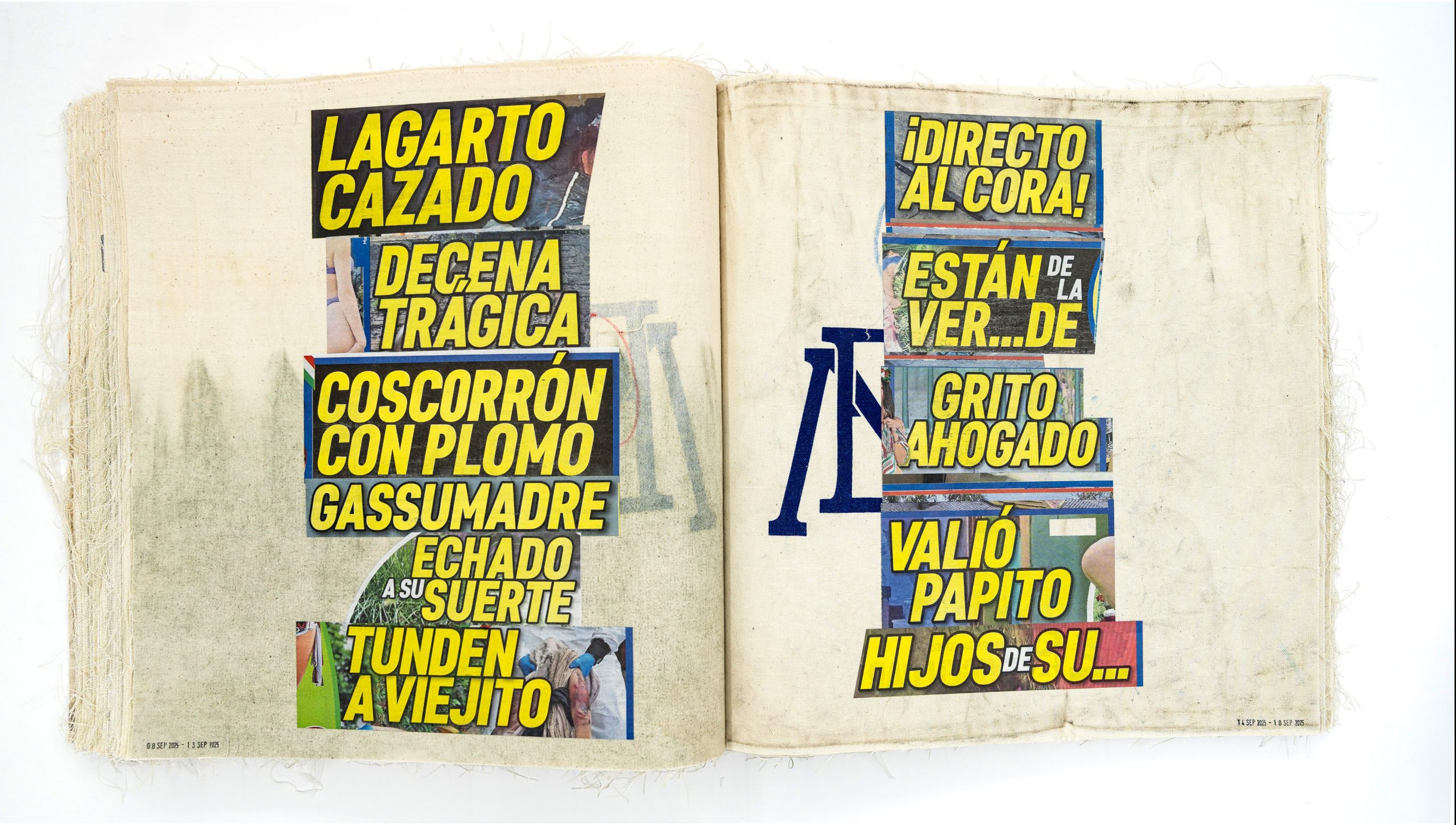
Moris establishes this graphic-pictorial dimension as a clandestine site: the makeshift stall that a migrant must erect and dismantle every day while working—or committing a crime—and while blending into an environment that briefly grants them the rights of citizenship and provides only what is necessary to continue the journey toward the American Dream. Although multiple techniques coexist within a single canvas, they converge into a unified narrative that is forceful yet restrained, silent yet harrowing. The process begins with the daily collection of newspapers, followed by the painstaking separation of images from text and the semi-handcrafted reproduction of selected elements into new compositional forms. A mastery of diverse techniques gives rise to assemblages on coarse industrial fabric and to the construction of a scenography whose exquisite corpses lead toward a central work entitled Cenotaph. This piece is nothing less than a mordant, alienated compendium of every headline published by the Mexican newspaper La Prensa over the course of an entire year, condensed into a fabric-bound book. Every crime reported in 2025 finally finds a place in limbo commensurate with the weight of its memory. It can be leafed through, smelled, contemplated, and will almost certainly stain the fingertips, for the volume bears no responsibility for the crimes it contains, and yet there is no escape from them.
A pair of works interrupts the exhibition with a remarkable material richness, bringing together diverse substances beneath a single critical lens. Once the migrant succeeds in reaching the United States, there is no possibility of retracing their steps; returning home in defeat is simply not an option. Instead, they begin to imagine new ways of carrying both their own flag and that of their host nation, forging a new layer of syncretic culture from the traditions of their homeland and the culture of consumption and disposability that defines their new environment. In these assemblages, Moris incorporates fabric from U.S. Army duffel bags, which migrants often use—when they are fortunate enough to travel back and forth—to transport their belongings and gifts for their families. Handcrafted objects, masks produced in the mountains of Guerrero—the Mexican state with one of the highest rates of male migration to the United States—stars that gradually transform into barbed wire, and stripes delineated by police batons all converge within these compositions. The resulting works unfold like two monumental symbolic scrolls, articulating the migrant’s equation: their internal struggle alongside the daily realities of adaptation—exploitation, discrimination, and persecution.
Poor Killing Poor is not merely a title but an indictment. It invokes art’s capacity to awaken those who mechanically reproduce the models imposed by political and media powers. Moris began his career by gathering information for what amounted to a manual of survival, decoding the signs, languages, and behaviours of marginal communities and neighbourhood crime. In recent years, his practice has become an effort to counter everything that dictates and compels—what was once called justice and constitutional order but has increasingly become a script that represents no one and protects even fewer. His work is a critique of the institutions that compel us all to fear, flee, and disappear, counting down toward a death that aspires to little more than a gravestone suggesting that our lives were not those of the poor.
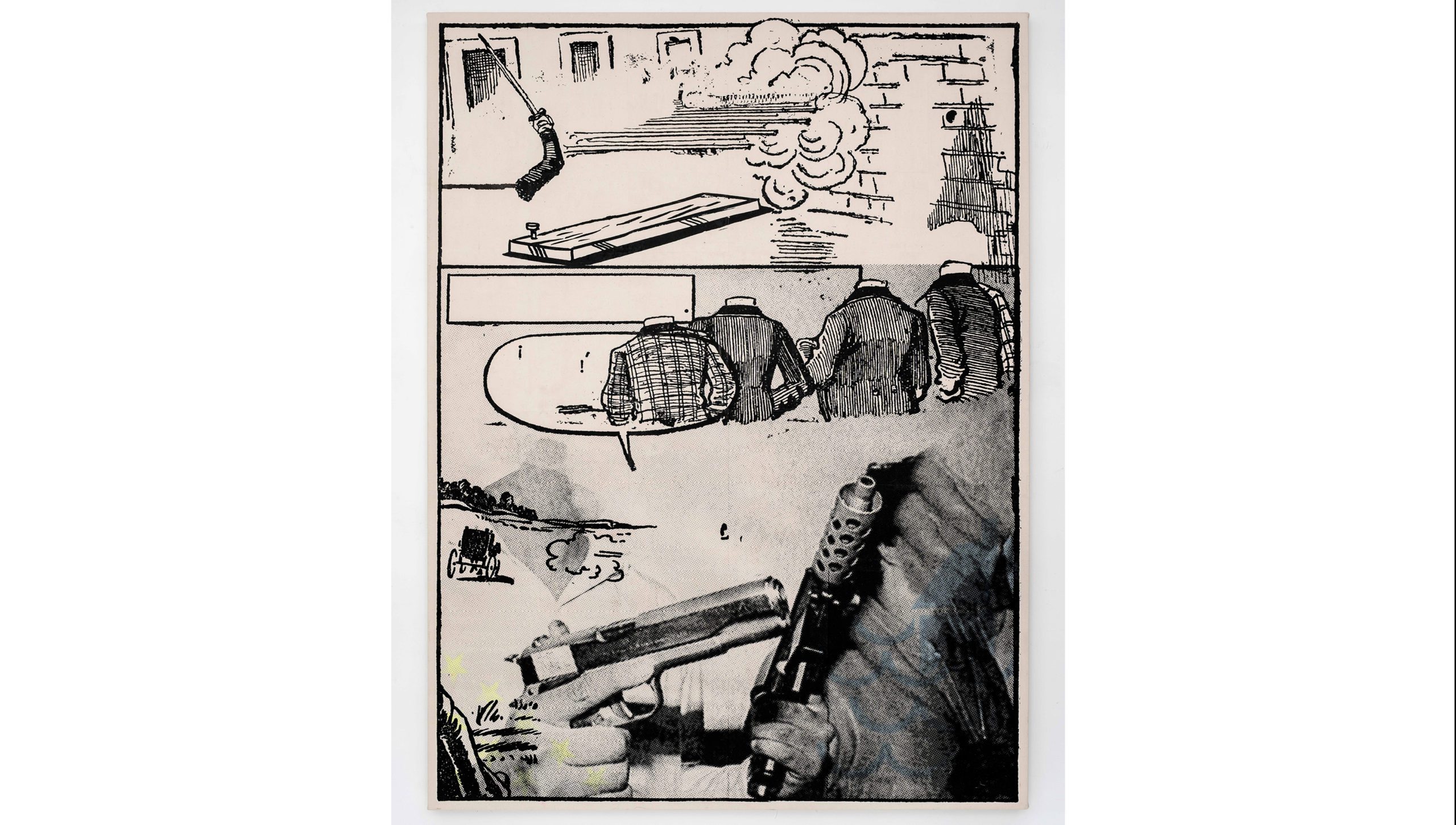
Moris. Pobres matando pobres 1. 2026. Collage and enamel on canvas. 200 x 150 cm
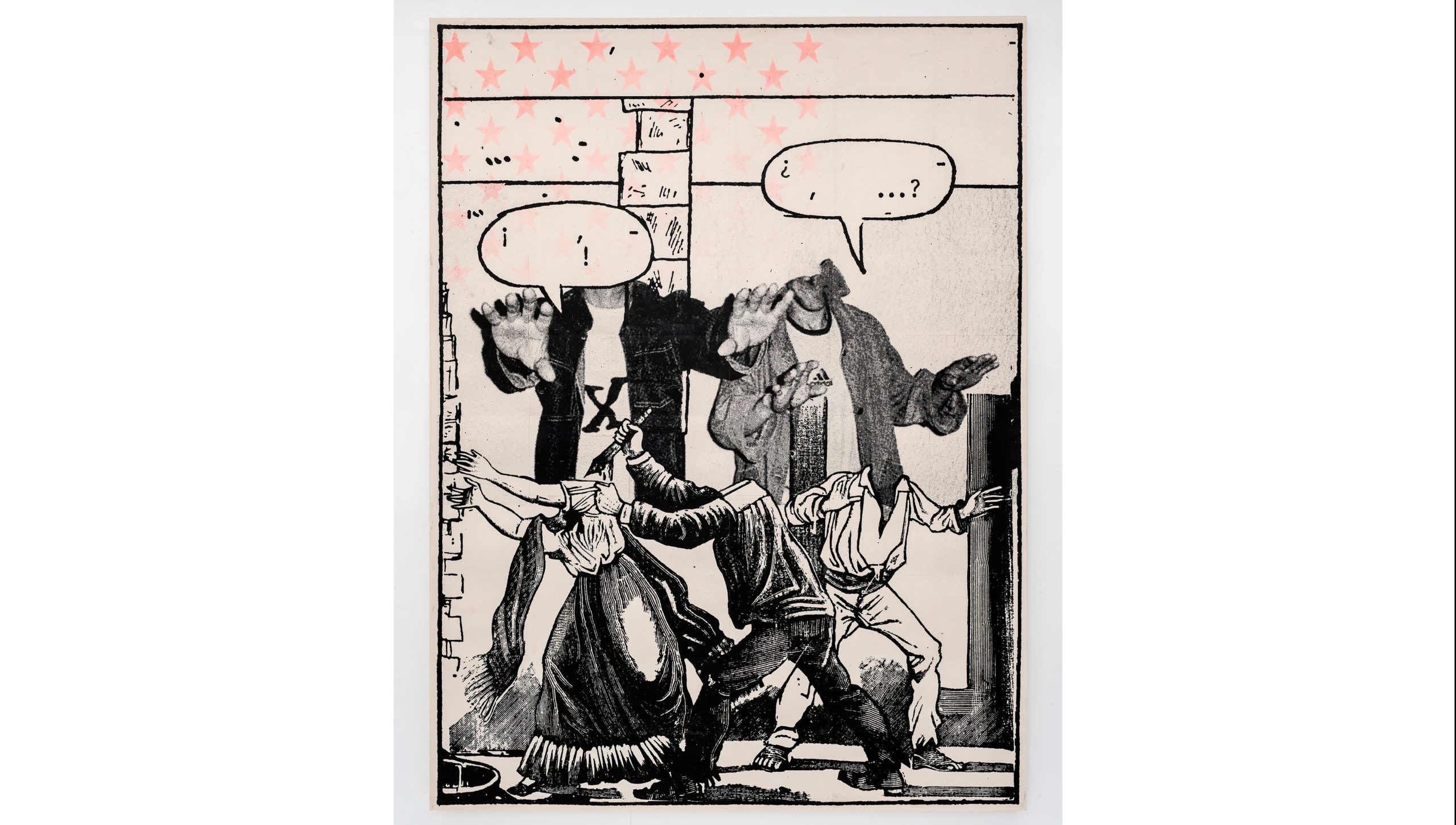
Moris. Pobres matando pobres 2. 2026. Collage and enamel on canvas. 200 x 150 cm
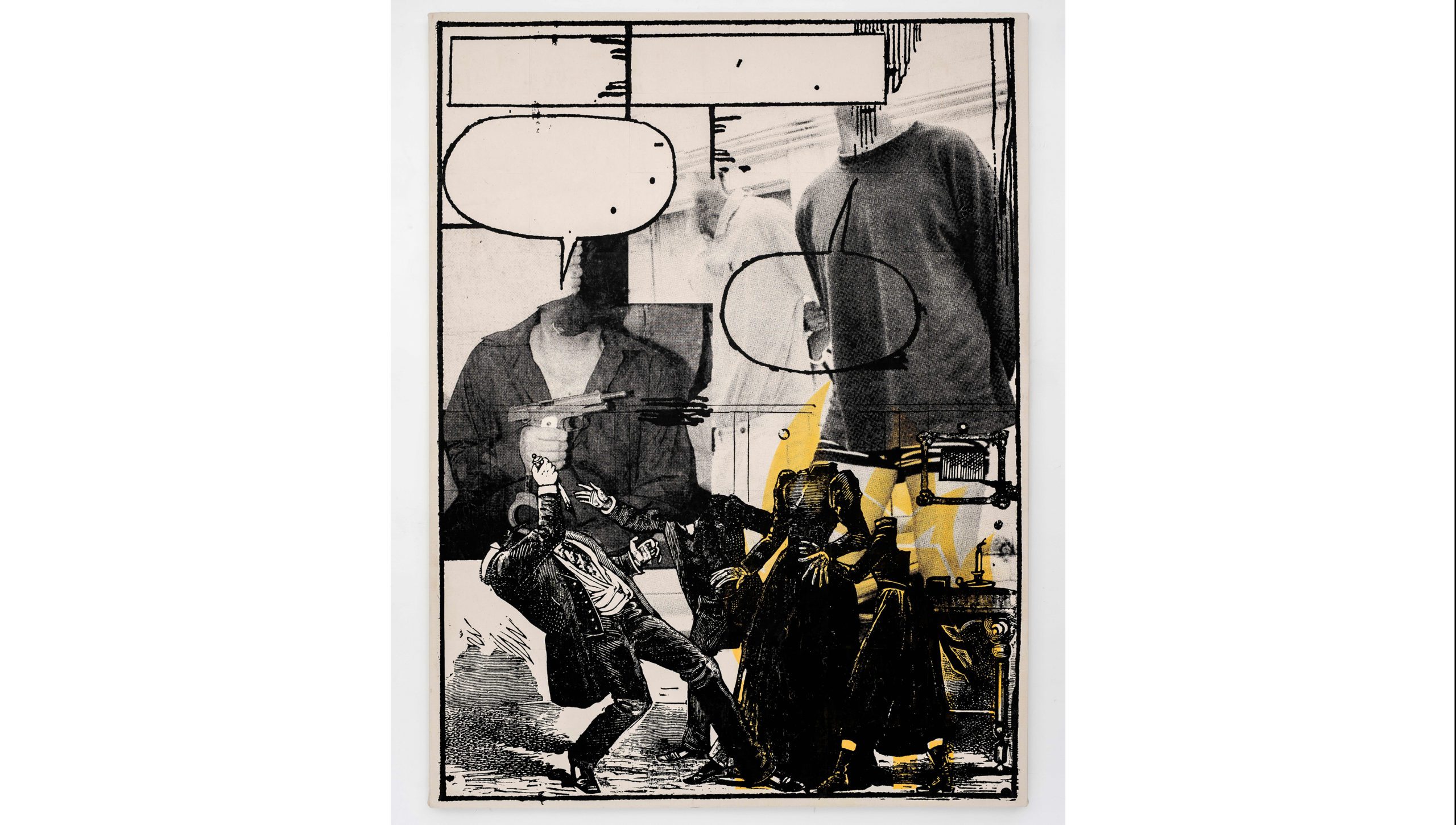
Moris. Pobres matando pobres 3. 2026. Collage and enamel on canvas. 200 x 150 cm
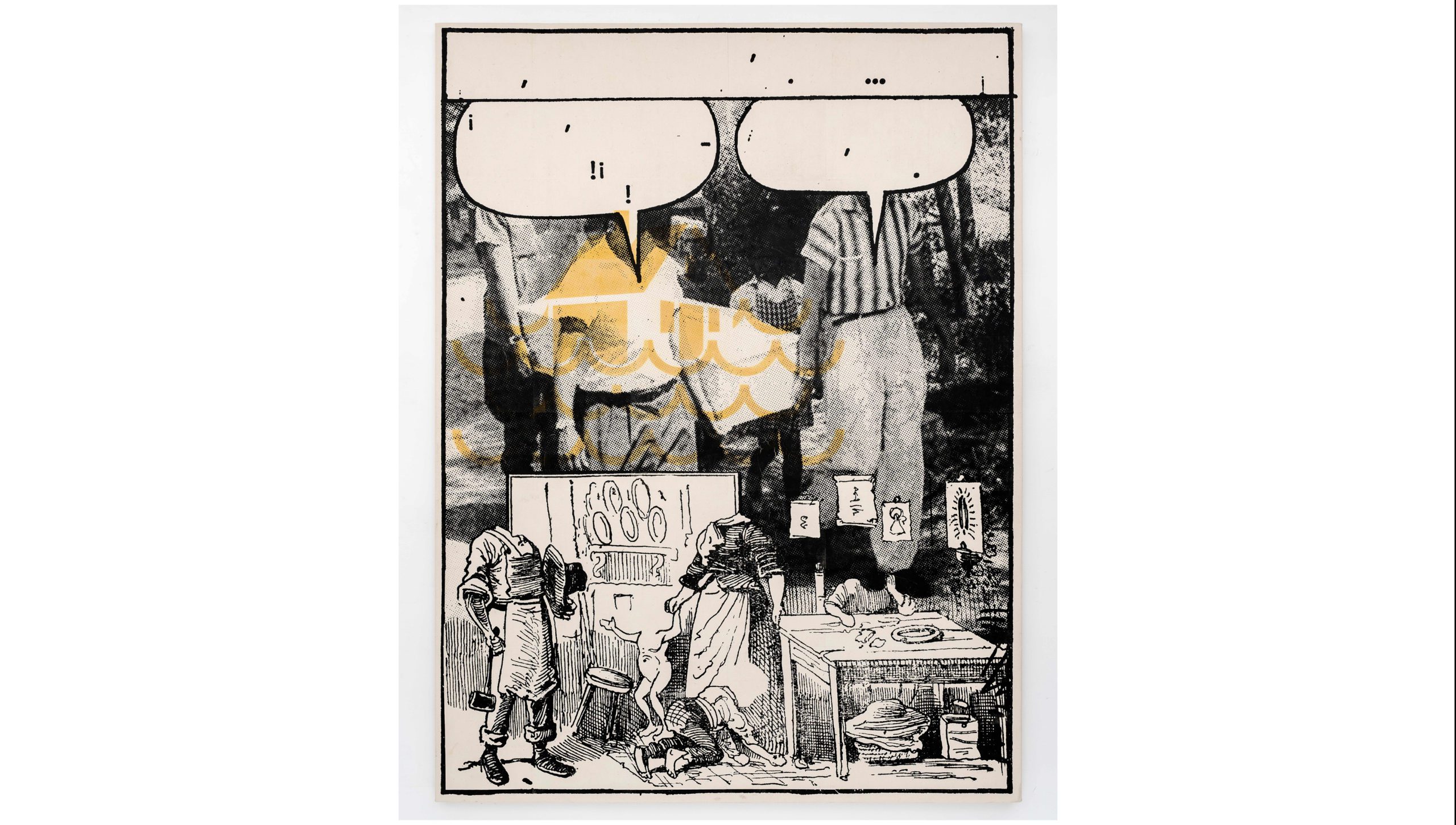
Moris. Pobres matando pobres 4. 2026. Collage and enamel on canvas. 200 x 150 cm
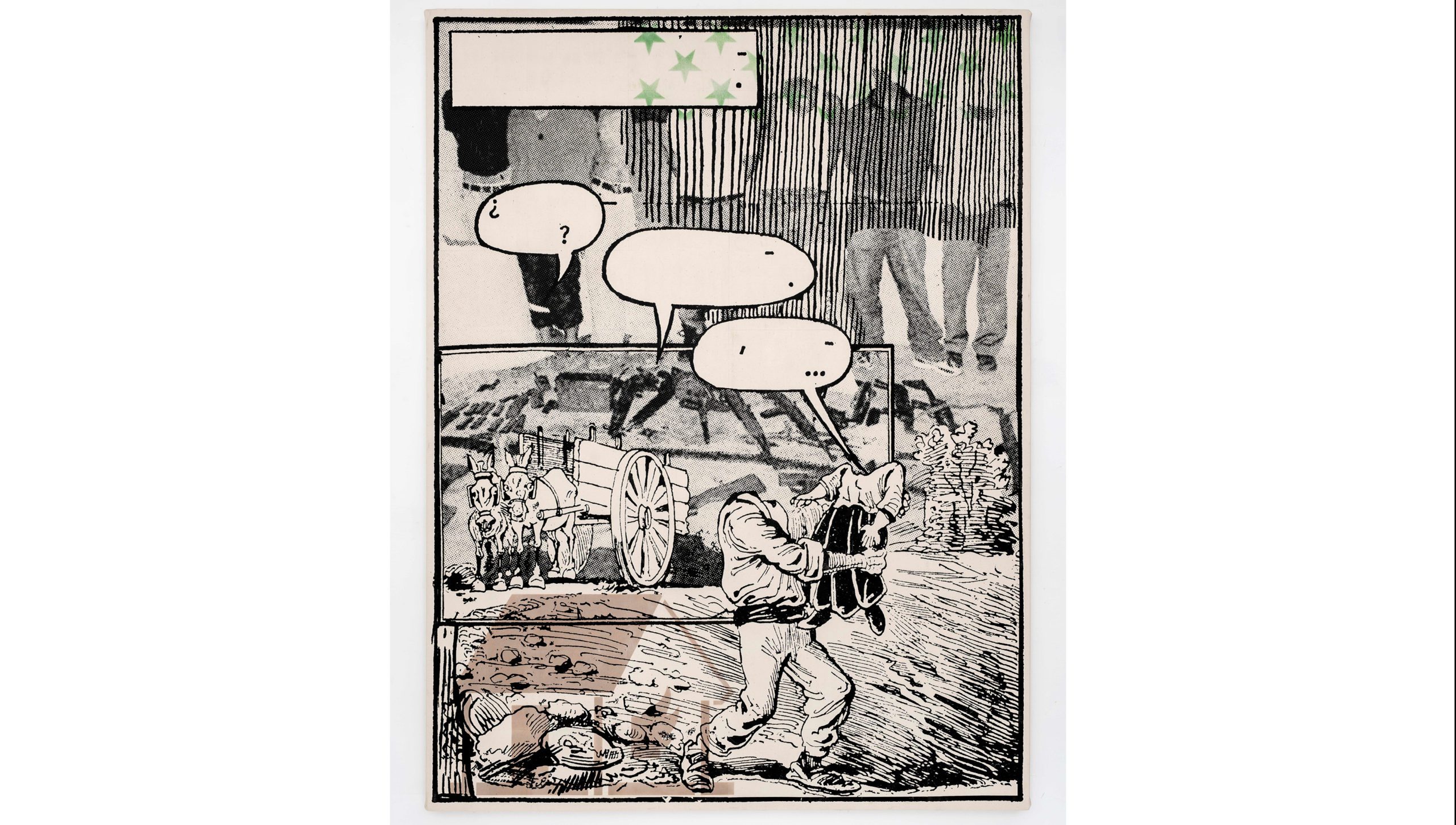
Moris. Pobres matando pobres 5. 2026. Collage and enamel on canvas. 200 x 150 cm
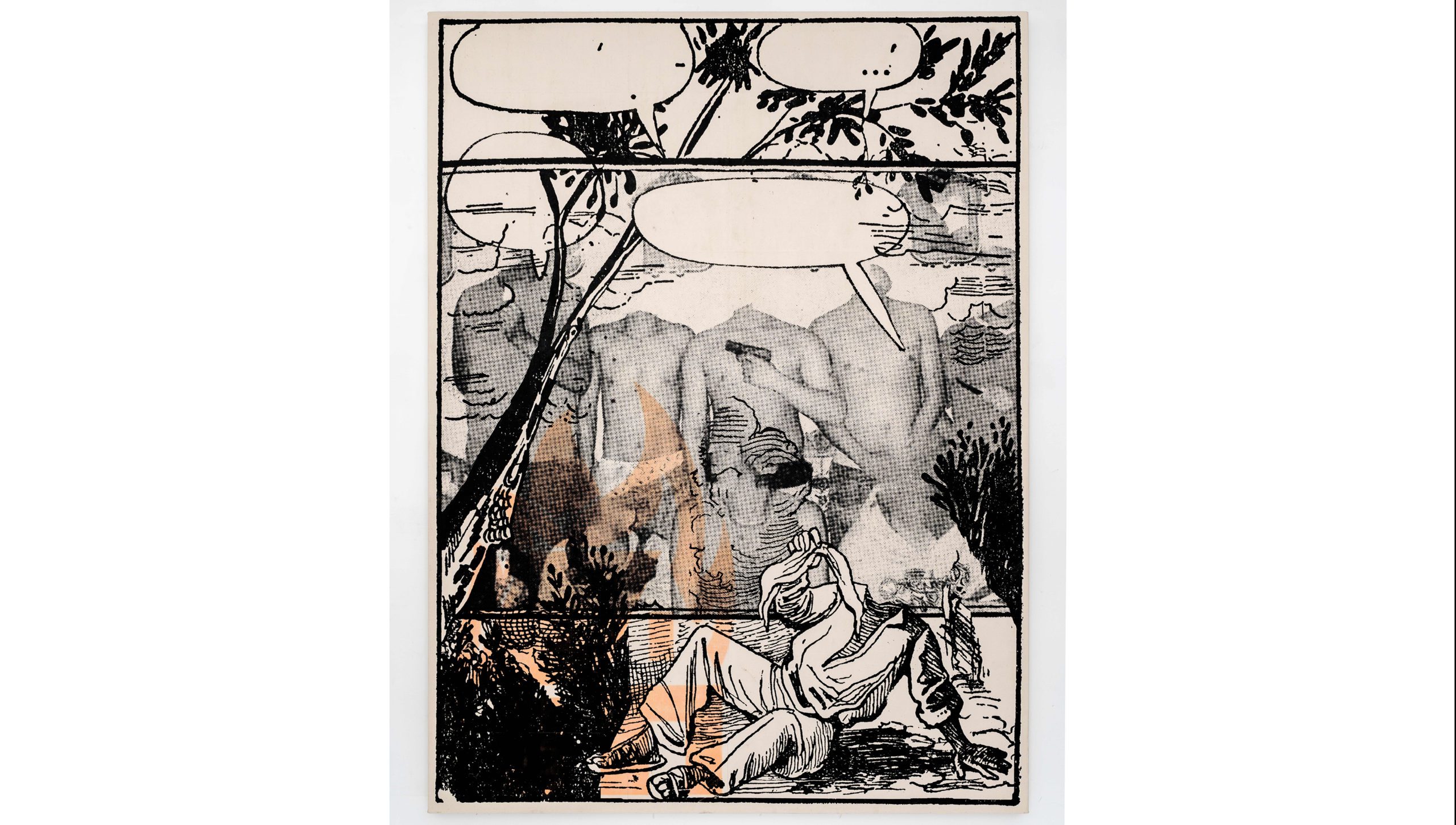
Moris. Pobres matando pobres 6. 2026. Collage and enamel on canvas. 200 x 150 cm
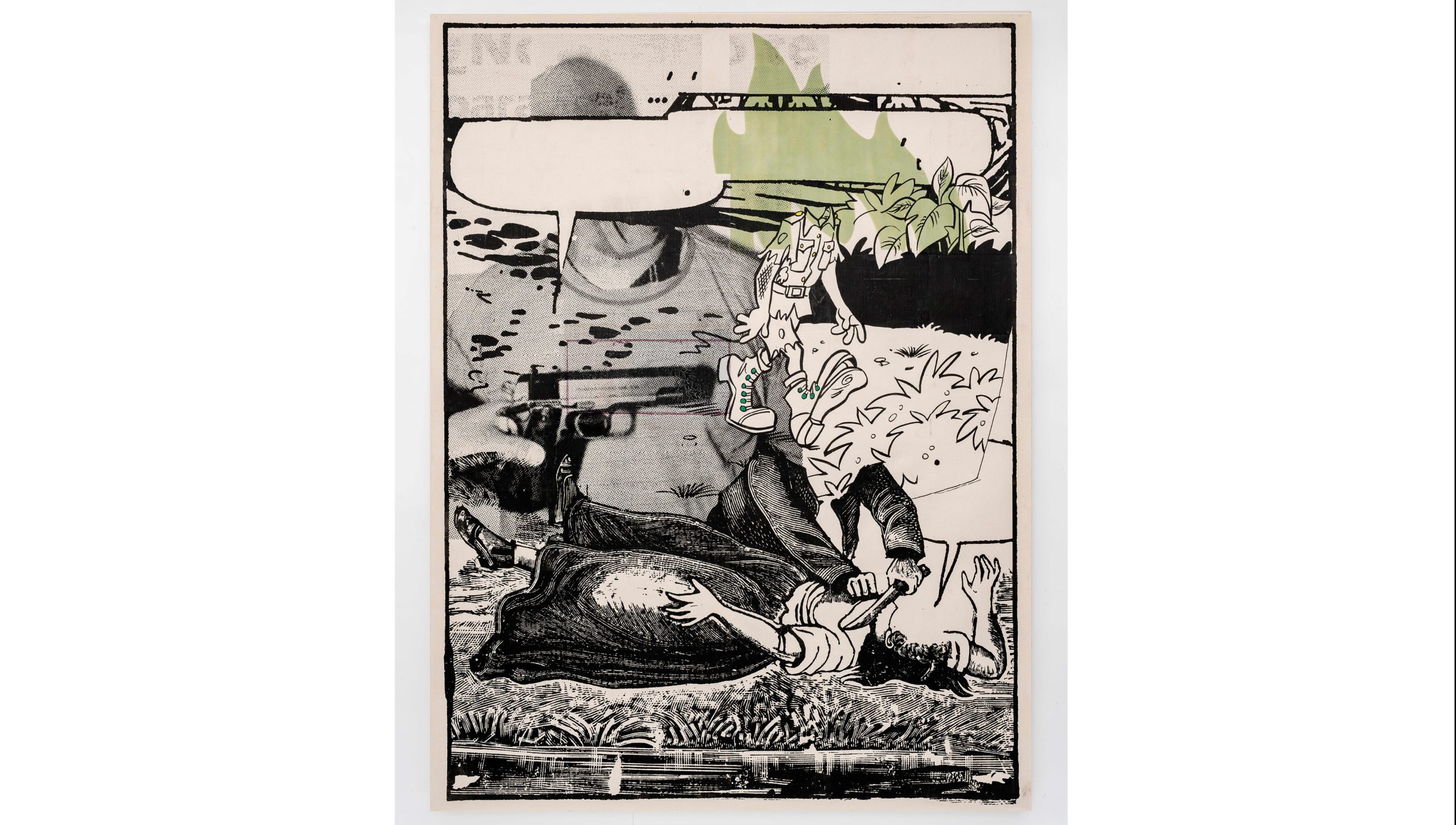
Moris. Pobres matando pobres 7. 2026. Collage and enamel on canvas. 200 x 150 cm
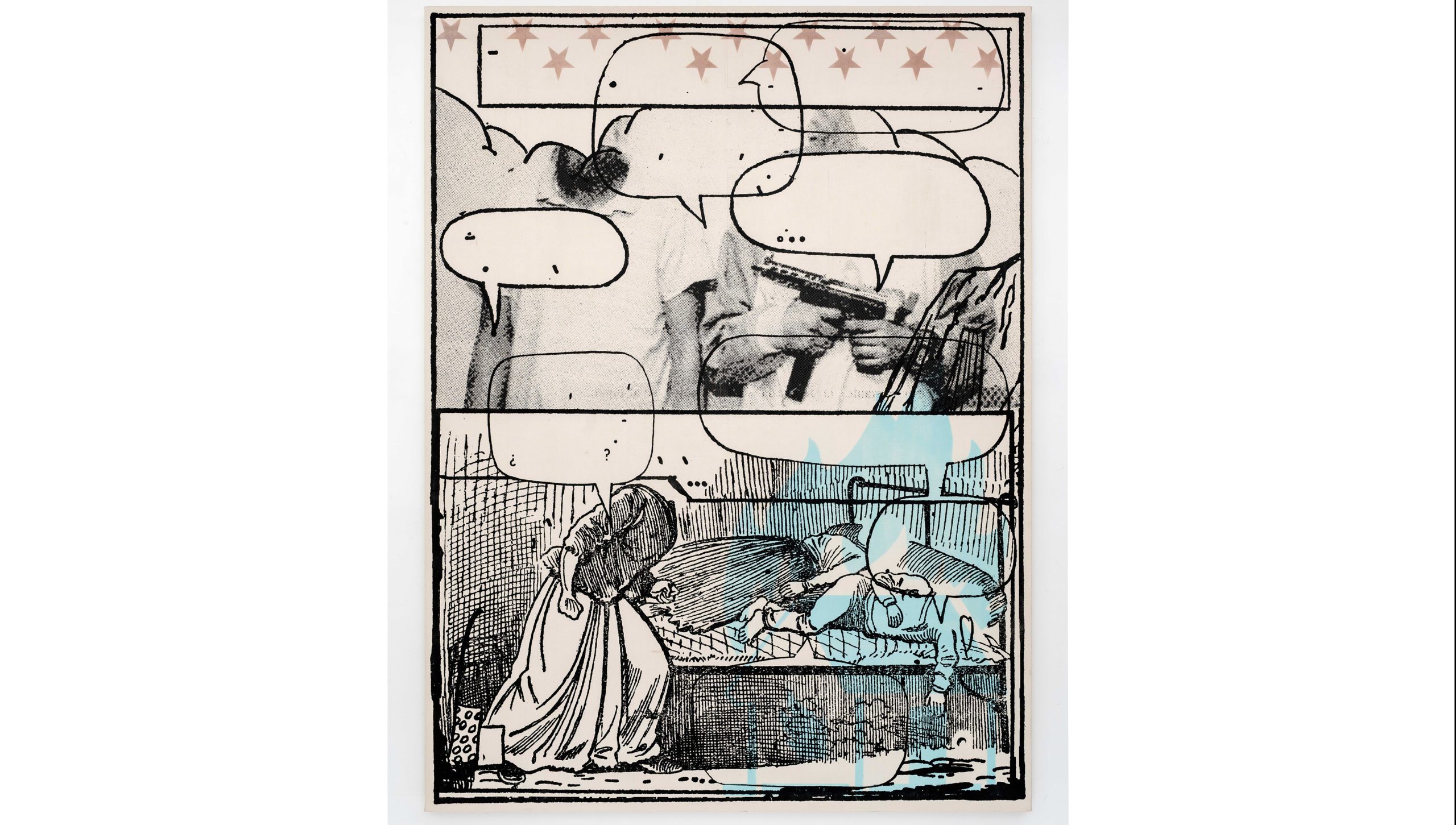
Moris. Pobres matando pobres 8. 2026. Collage and enamel on canvas. 200 x 150 cm
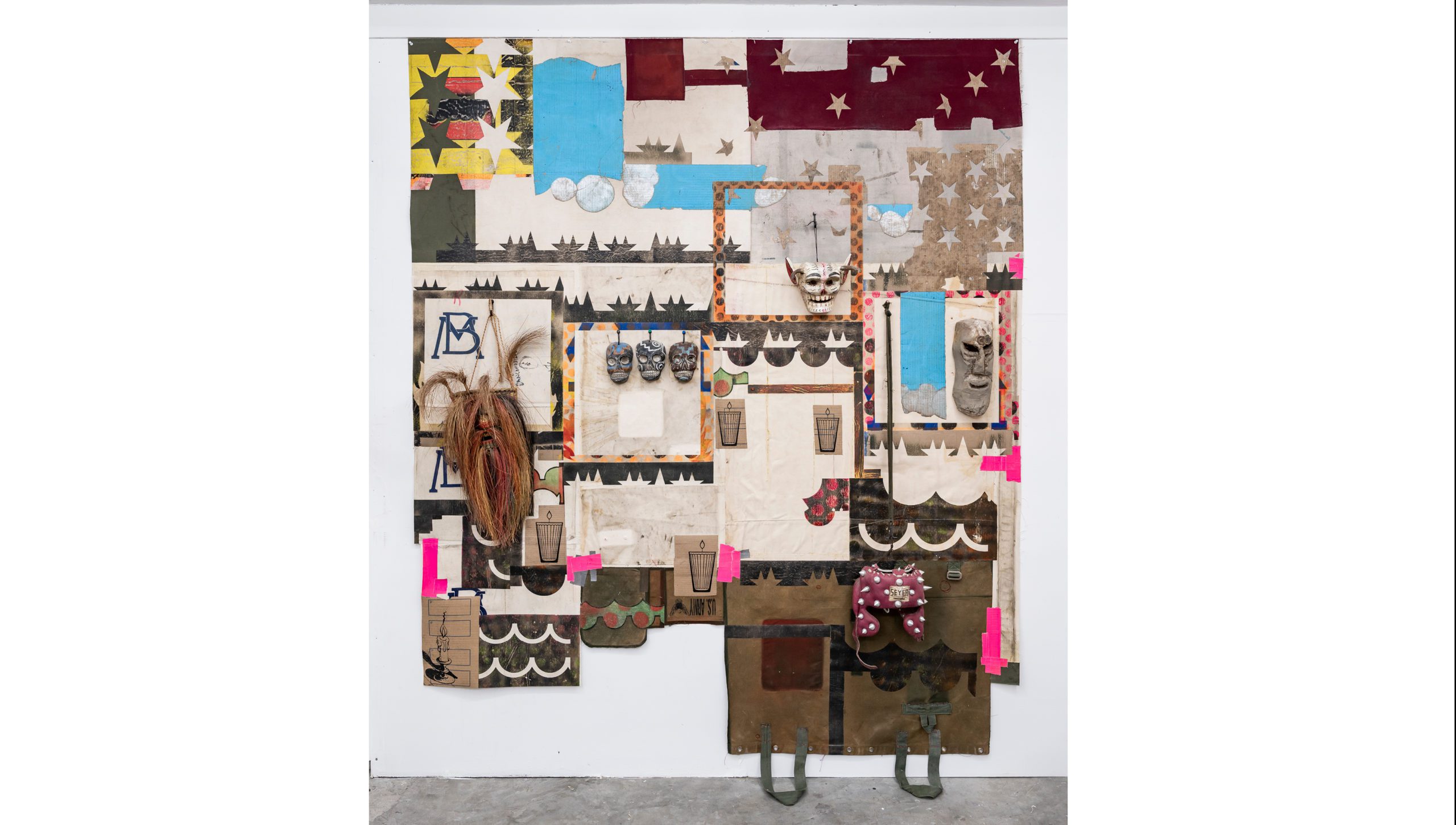
Moris. La vida en negro (Deportados 1). 2026. Collage, cardboard, tape and masks on bags of the Bank of Mexico. 240 x 200 x 25 cm
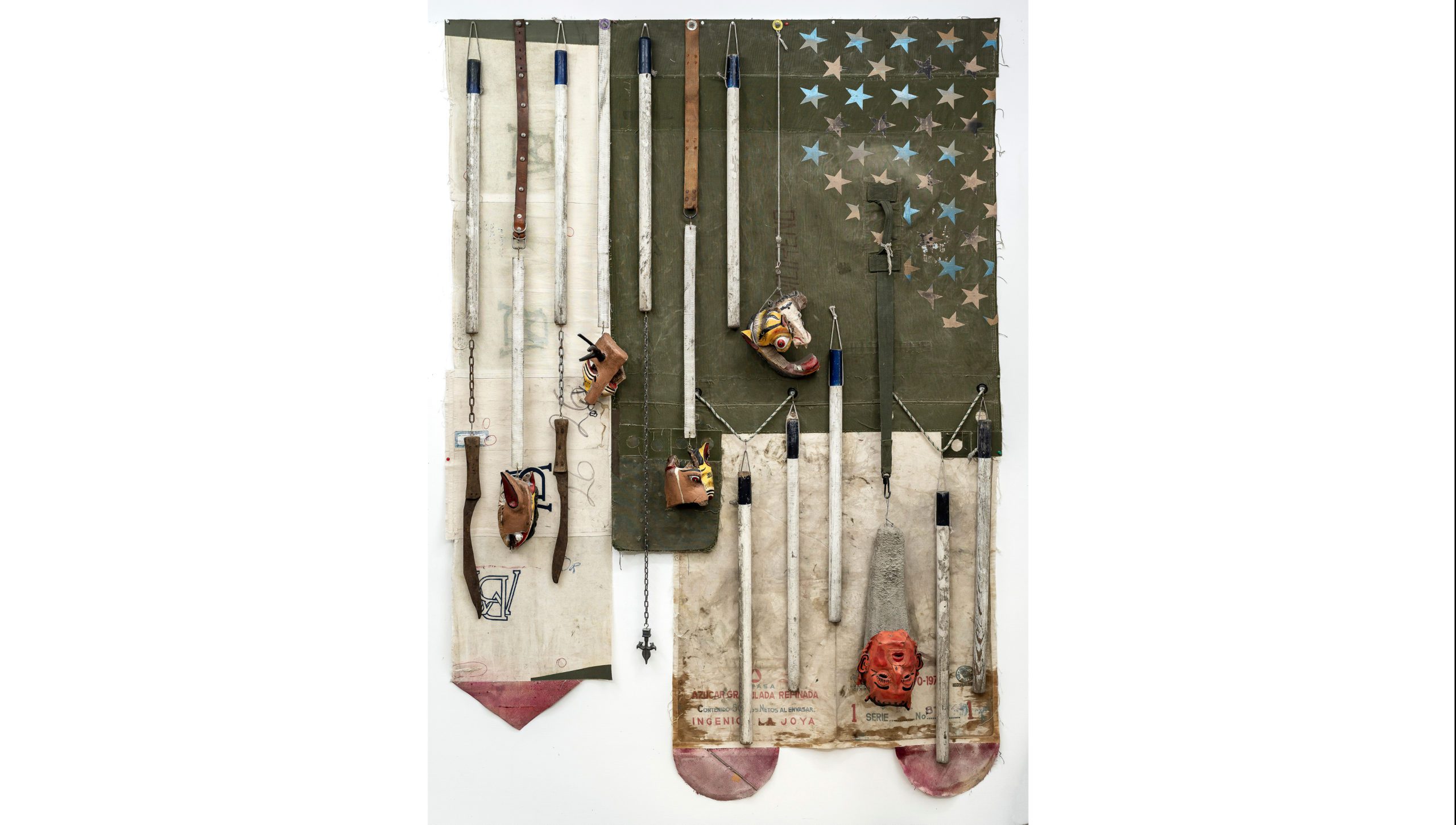
Moris. La vida en negro (Deportados 2). 2026. Collage, masks, metal, wood, fabric and bags of the Bank of Mexico. 240 x 200 x 25 cm
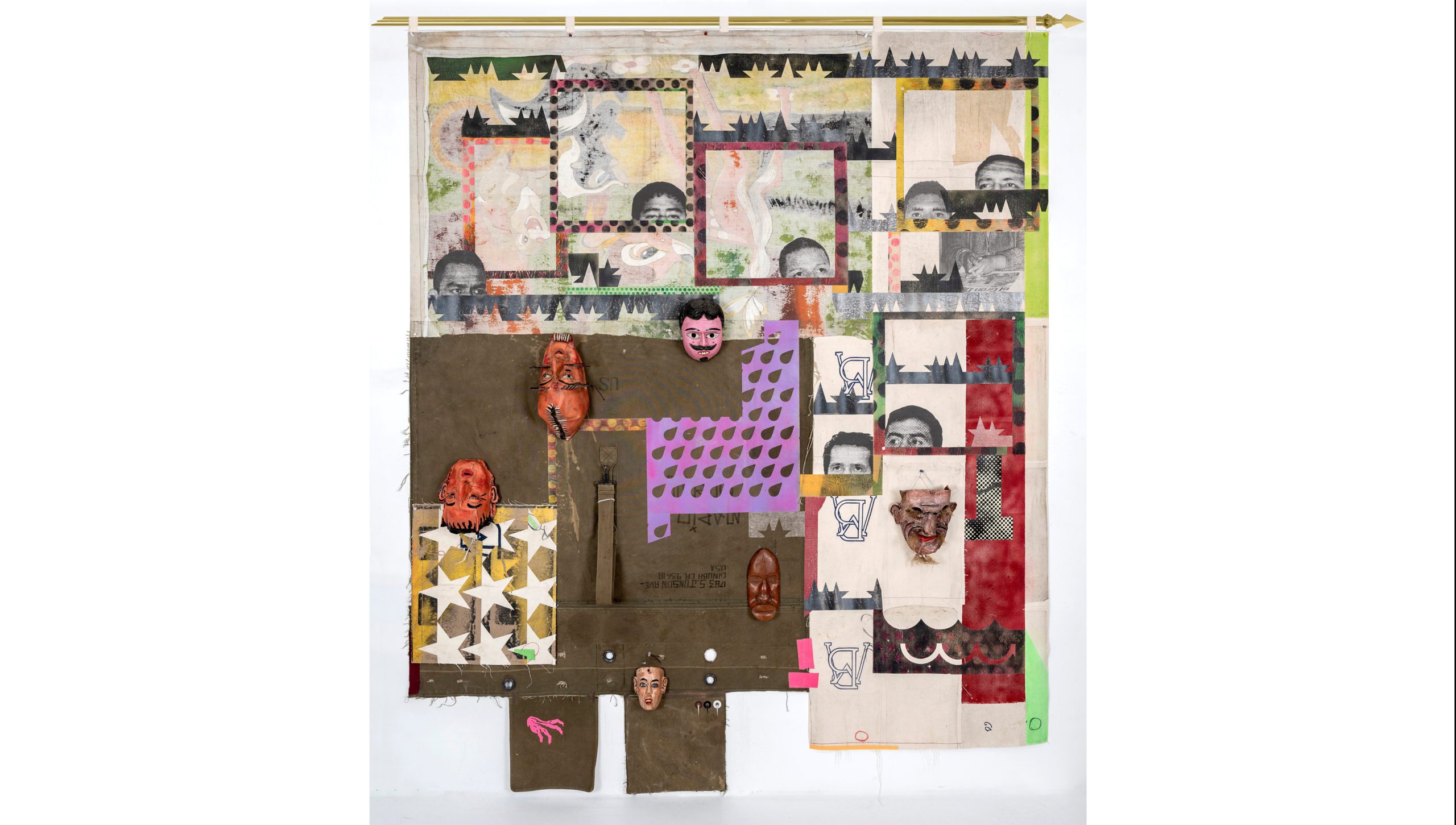
Moris. La vida en negro (Deportados 3). 2026. Collage, masks, metal, wood, fabric and bags of the Bank of Mexico. 230 x 200 x 30 cm
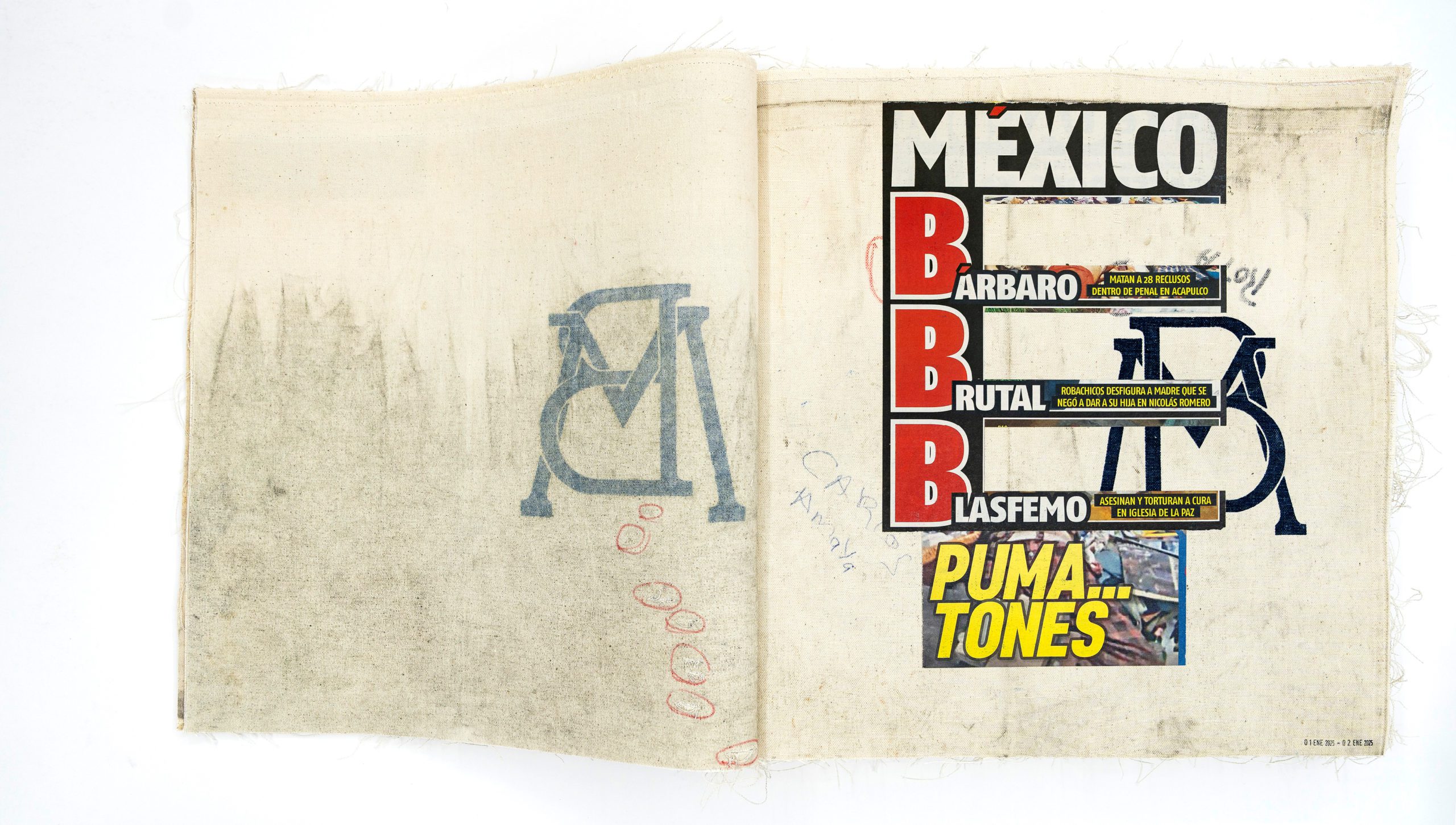
Moris. Cenotafio. 2026. Collage and enamel on fabric. 49 x 45 (90) x 8 cm
Moris
Solo Exhibitions
2023
La cárcel a cielo abierto. NF/NIEVES FERNÁNDEZ, Madrid, Spain
Walking Towards the Executioner. Rolando Anselmi Galerie, Rome, Italy
2022
The Window Project. Rolando Anselmi Galerie, Berlin, Germany
2020
A Shot into the Air. Marc Straus Gallery, New York, USA
2019
Out There, There’s a Bullet for Everyone. NF/NIEVES FERNÁNDEZ, Madrid
2018
Even Dead, You Can Die. Asphalt Festival, Düsseldorf
2017
Four Legs Good, Two Legs Bad. Arróniz Arte Contemporáneo, Mexico City
2016
Escaping the Rope. Galerie Michael Sturm, Stuttgart
2015
The Triumph of the Rat. Stadtgalerie, Saarbrücken
No One Will Miss You in the Pack. NF/NIEVES FERNÁNDEZ, Madrid
The Bark Is No Worse Than the Bite. ArtBo – Solo Projects, Bogotá
2014
Prey and Predator. Records of Illegality and Violence. Sala de Arte Público Siqueiros, Mexico City
A Monster Walks Among You. Proyecto Fachada – Sala de Arte Público Siqueiros, Mexico City
The Law of the Street. Galería González y González, Santiago, Chile
2013
The Beast Will Have Its Day. Galerie Michael Sturm, Stuttgart
No Animal Has the Right to Worry About What May Happen Tomorrow. Museo de Arte Carrillo Gil, Mexico City
2012
It’s Hard to Be Tied Like a Sheep When You’re a Wolf. Baró Galería, São Paulo
The Vultures Are Already Circling. Arróniz Arte Contemporáneo, Mexico City
Sadic. González y González Gallery, Santiago, Chile
2011
When the Lion Kills, the Jackals Benefit. I-20 Gallery, New York
You’re Alive Because I Didn’t Kill You. ARCOmadrid – Solo Projects, Focus Latin America, Madrid
2010
Speranza. Colectivo Viernes. El 52. OMR Gallery, Mexico City
My House Is Your House. LAND, The Geffen Contemporary at MOCA, Los Angeles
2008
An Animal Loses Its Life Because Another Is Hungry. Museo Experimental El Eco, Mexico City
2007
Den of Miscreants. Trolebús Gallery, Mexico City
We All Have Dirty Shoes. ARCOmadrid – Project Room, KBK Arte Contemporáneo, Madrid
2006
House Cart Car. 9th Havana Biennale, Havana
2005
Urban Urgency. KBK Arte Contemporáneo, Mexico City
Group Exhibitions
2023
Tracing the World’s Footprint. NF/NIEVES FERNÁNDEZ, Madrid
Personal Showcase. Rolando Anselmi Galerie, Rome, Italy
2019
The Material Order of Things. Museo de Arte Contemporáneo de Monterrey (MARCO), Monterrey
In Order of Appearance. Real Academia de Bellas Artes de San Fernando, Madrid
2018
No Place. Berlin
2017
Mexibiliti. Casa del Lago (UNAM), Mexico City
2015
Everything You Are I Am Not. Tiroche DeLeon Collection, Miami
Traces and Vestiges: Inquiries on the Present. Museo Amparo, Puebla
Latin American Roaming Art. Museo de Arte Carrillo Gil, Mexico City
A Sense of a Space. Mana Contemporary, Miami
2014
The Disarray. The Curious Case of the Untidy Art. ARTIUM, Vitoria
2013
Metal Coyote. Y Gallery, New York
Museo de la Nación, Lima
Dracula Effect. Museo Universitario del Chopo, Mexico City
2012
30th São Paulo Biennial. The Imminence of Poetics, São Paulo
The Hour and the Sites. MACO, Oaxaca
Invisible Maps. Galería Luis Adelantado, Mexico City
2011
Time of Suspicion. Museo de Arte Moderno, Mexico City
NOW. Centro Cultural Cabañas, Guadalajara
Mexico. Poetry and Politics. Nordic Watercolor Museum, Stockholm
Sparkle. JUMEX Collection, Mexico City
Honor. Fraser Gallery, Los Angeles
Mexico. Poetry and Politics. San Francisco State University
Mexico Expected/Unexpected. MOCA, San Diego
2010
Educating Knowledge. MUSAC, León
Where Do We Go From Here?. Contemporary Arts Center, Cincinnati
Viva la Revolución. MOCA, San Diego
2009
Where Do We Go From Here?. Bass Museum, Miami
Zwischen Zonen. MUMOK, Vienna
2008
The Lines of the Hand. MUAC, Mexico City
Schweiz Über Alles. JUMEX Collection, Mexico City
Fortunate Objects. CIFO Collection, Miami
2007
International Triennial of Architecture, Lisbon
2006
Skier at the Bottom of a Well. JUMEX Collection, Mexico City
Blindness. MACO, Oaxaca
Light/Art. Contemporary Arts Forum, Santa Barbara
Awards
Tiroche DeLeon Residency, Jaffa, Israel
LARA Latin American Roaming Art, Museo de Arte Carrillo Gil, Mexico City
30th São Paulo Biennial. The Imminence of Poetics
Younger than Jesus: The Artist Directory. New Museum, New York & Phaidon Press
CIFO Grants & Commissions Program Awards, Miami
Triennale Internacional de Arquitectura, Lisbon
SIVAM Visual Arts Acquisition Prize, Mexico City
Collections
Museum of Modern Art (MoMA), New York
SMAK, Ghent
JUMEX Collection, Mexico City
Museum of Contemporary Art (MoCA), Los Angeles
ARTIUM, Vitoria
Museum of Contemporary Art, San Diego
MACO, Oaxaca
Museo de Arte Moderno, Mexico City
Museo Amparo, Puebla
CIFO Collection, Miami
ABN/AMRO Kunststichting, Amsterdam
Perez Art Museum (PAMM), Miami
Peter Stuyvesant Collectie, Netherlands
SPACE Collection, California
PMMK, Oostende
Karl Ernst Osthaus-Museum, The Hague
Banco F. van Lanschot, Den Bosch
AXA Collection, Madrid
Fondation Carmignac, Porquerolles
Banco Sabadell Collection, Barcelona
Celia Sredni Birbragher Collection, Bogotá
Tiroche DeLeon Collection, Israel
Americas Collection, ASU Art Museum, Tempe, Arizona
Bergé Collection, Madrid
FEMSA Collection, Monterrey
Juan Beckmann, Mexico City
David Chipperfield, London
Pepe Cobo, Madrid
Teófilo Cohen Collection, Mexico City
Isabel and Agustin Coppel Collection, Culiacán
Nanette Gehrig, Monte Carlo
Boris Hirmas Collection, Mexico City
Adsia City Trust Collection, Singapore and Australia
David Johnson, Los Angeles
Kells Collection, Santander
Seattle Art Museum, Seattle
Press
2020 – El Cultural – ARCO 2020
2019 – PAC Plataforma de Arte Contemporáneo – Entrevista a Moris
2015 – Forbes México – Moris: el artista rebelde que va y viene del infierno
2008 – ARTFORUM – Moris. El Eco Experimental Museum